
Knowledge Center
Prototyping & Quick-Turn
What quick-turn manufacturing is, how prototypes accelerate product development, and what to review before moving to production.
“Quick-turn” describes a requested schedule shorter than a supplier's standard plan, but suppliers may define the term differently. Availability depends on the drawing, material, quantity, finishing, inspection, and current workload. Ask for a specific schedule and its assumptions before placing an order. An expedited request should not be assumed to reduce inspection or documentation requirements. Mikron lists prototype-through-production work; contact the team to confirm current availability for a requested date.
Quick-turn manufacturing is most valuable when time carries a measurable cost. Product development teams rely on it when a design iteration needs to be in hand for testing before a scheduled review, trade show or customer demonstration. Production operations use it when a line-down situation requires replacement parts faster than a standard supplier can deliver. Engineering teams use it when a field failure needs a corrective hardware fix faster than the normal procurement cycle allows. Quick-turn is also the right choice early in a new product introduction when design confidence is still building — manufacturing small quantities rapidly lets teams validate fit, function and assembly before committing to a larger production run. It is less appropriate when budget is the primary constraint and schedule flexibility exists, since expedited service carries a cost premium. The decision usually comes down to the cost of delay versus the premium for speed. When the cost of waiting — in lost revenue, program risk or customer impact — exceeds the surcharge for quick-turn service, expedited manufacturing is the right investment.
New product introductions involve iterative cycles of design, build, and test. An expedited manufacturing schedule may support a project's testing plan, but availability depends on the part, material, quantity, inspection, finishing, and supplier workload. Confirm the requested date and the assumptions behind it with the manufacturer. A supplier that also supports production work can discuss how prototype requirements relate to a possible production release. Mikron lists prototype-through-production work; share the project details to confirm fit and schedule.
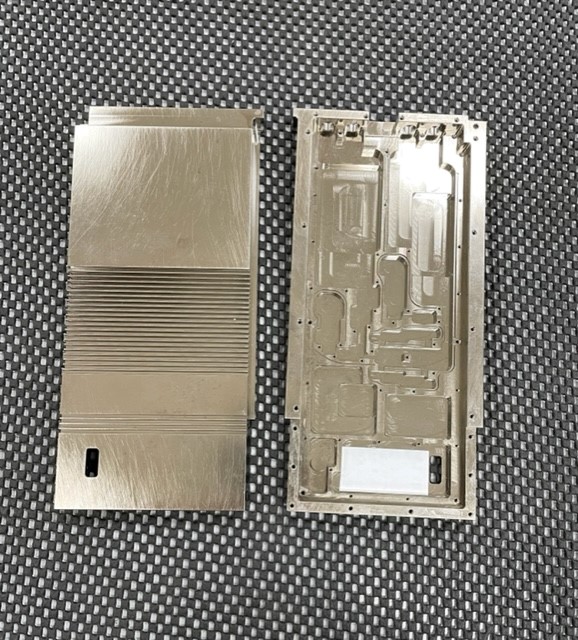

CNC prototype machining uses computer-controlled milling or turning to make one or more parts from a CAD model before a design or production process is finalized. The work plan depends on the part, material, drawing, setup, inspection, and any finishing. Ask the supplier what information is needed and request a project-specific schedule. Prototype parts can support fit or functional evaluation when their material and manufacturing process suit the intended test; confirm those requirements before ordering.

Prototypes exist to answer questions about a design before those questions become expensive production problems. A physical prototype reveals whether mating parts fit as intended, whether a machined feature is achievable at the specified tolerance, whether the part can be assembled and serviced as designed and whether it performs as modeled under real loads, temperatures or environments. CAD tools are powerful, but they operate on assumptions — material properties, manufacturing variation, assembly stack-ups and real-world loading conditions all behave differently in hardware than in simulation. Discovering a design flaw in a prototype costs a drawing revision and perhaps a second round of machining. Discovering the same flaw after production tooling has been cut, inventory has been built or a product has reached customers costs far more in money, time and reputation. Prototyping is risk management applied to hardware development. The investment in a prototype is nearly always smaller than the cost of the problems it prevents — particularly as designs grow in complexity or as the consequences of field failure become more serious.
Have a manufacturing question about your part?
Talk with the Mikron team or send us your drawings for review.
A well-structured prototype program should validate several categories of risk before committing to production. Form validation confirms that the part's geometry and dimensions are correct — that mating interfaces fit, that mounting features align and that the assembly goes together as intended. Fit validation extends to adjacent components in the larger system, confirming that the part functions within its actual operating environment rather than only in a CAD assembly. Functional validation tests whether the part performs its intended purpose under realistic conditions — mechanical load, thermal cycling, vibration, pressure or whatever operating environment applies. Manufacturing validation confirms that the design can be produced to specification consistently and at acceptable cost, identifying features that may be difficult, expensive or risky to hold in production. Finally, a prototype is an opportunity to validate the manufacturing process itself — material behavior, surface finish, secondary operations and inspection methods. Not every prototype needs to prove all of these things simultaneously, but a production decision made without addressing the relevant validation categories carries risk that will eventually surface.
Prototype and production manufacturing share the same fundamental processes — CNC milling, turning, sheet metal forming — but they are optimized for different objectives. Prototype manufacturing prioritizes speed and flexibility. Parts are typically programmed directly from a CAD model with minimal setup documentation, using general-purpose tooling and workholding that can be adjusted quickly if the design changes. The goal is to produce accurate parts fast, not to build a repeatable, documented process. Production manufacturing prioritizes consistency, efficiency and cost per unit. Dedicated fixtures reduce setup time and improve repeatability across a run. Process documentation, work instructions and inspection plans are formalized. Tooling is selected and proven for the specific part. Quality records are maintained systematically. These differences mean that a part that machines easily as a prototype may require process engineering to manufacture efficiently at production volumes — and vice versa, a design optimized for high-volume production may be unnecessarily costly to prototype. Working with a manufacturer who understands both modes can help bridge the transition and flag production-readiness concerns while the design is still in prototype.
Prototyping is one of the most reliable ways to surface design-for-manufacturing (DFM) issues before they become production costs. Some problems are visible only when a machinist actually attempts to cut the part: a tight internal radius that no standard end mill can reach, a deep narrow pocket that requires specialized tooling, a feature that requires an additional setup that was not apparent from the CAD model, or a tolerance combination that is geometrically achievable but extremely difficult to inspect. Other DFM issues emerge during assembly of the prototype — a fastener that cannot be installed with standard tooling, a part that requires a third hand to hold while a screw is driven, or a seal groove that cannot be cleaned adequately in production. A manufacturer who actively communicates these observations during prototype manufacturing gives the design team actionable feedback before the design is frozen. This is one reason to choose a prototype manufacturer who also does production work — they are thinking about the full manufacturing process, not just whether they can machine one part. Engaging a manufacturer early in the design process, even informally, can prevent many DFM issues from reaching the prototype stage at all.
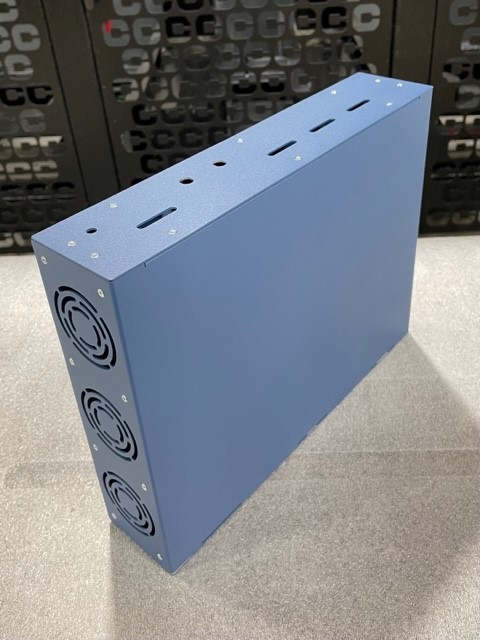

Several design practices consistently reduce manufacturing time without compromising function. Using standard material sizes and stock dimensions avoids custom material procurement delays. Designing internal radii to common end mill sizes — rather than requiring special tooling — allows a machinist to proceed without sourcing or grinding a custom cutter. Avoiding unnecessarily tight tolerances on non-critical features reduces the number of additional operations and inspection steps required. Designing for standard drill and tap sizes keeps thread features within a shop's standard tooling inventory. For sheet metal work, designing bends with standard radii and avoiding features that require complex forming sequences speeds fabrication. Providing a complete drawing package — model and 2D drawing — before the RFQ eliminates the clarification cycle that often delays both quoting and production start. If a design is still evolving, flagging which dimensions are firm and which may change allows a manufacturer to begin programming work on the stable portions. Simple, well-documented designs that use standard processes and materials move through a shop faster than complex or ambiguous ones, regardless of the shop's capability.
Prototype timing depends on material availability, part complexity, setup and programming needs, inspection requirements, finishing, completeness of the drawing package, and the supplier's current workload. Include the model and drawing, material, quantity, required documentation, and target date in the RFQ. Ask the supplier to confirm a project-specific schedule and identify any assumptions or dependencies before placing the order.
Have a manufacturing question about your part?
Talk with the Mikron team or send us your drawings for review.
A manufacturer who produced your prototype is often the most efficient path to production for the same part. The shop already holds the CAD model, has resolved any programming or fixturing challenges, understands the material behavior and has an inspection baseline from the prototype. Transitioning to a new supplier at production start means rebuilding that knowledge from scratch, including potential re-qualification of the part. Single-source manufacturers — those who support both prototype and production work — can carry institutional knowledge about your part from the first article through long-term repeat orders. They can also maintain tooling, fixtures and process documentation between releases, which reduces setup time and cost on repeat orders. The transition from prototype to production is also an appropriate point to revisit pricing and process, since the economics of production quantities differ from prototype economics. A manufacturer invested in the program will proactively identify opportunities to reduce cost at volume — through improved fixturing, toolpath optimization or material procurement efficiencies. Mikron supports customers across the full arc from initial prototypes through ongoing production programs.
The transition from prototype to production is a decision point that deserves structured review. Confirm that the design is fully released — that the drawing revision is controlled and that any changes discovered during prototype testing have been incorporated and approved. Review whether all tolerances are achievable consistently at production volume, not just on one or two prototype pieces; features that were held by skilled hands in a prototype may need fixture support in production. Confirm that material specifications are finalized and that the alloy, temper and finish are consistently sourceable. Review inspection requirements and confirm that a first article inspection plan is in place for the production run. If the part involves secondary operations — heat treatment, finishing, plating — verify that those suppliers are qualified and have capacity. Evaluate whether the original prototype supplier is the right production partner based on capacity, quality system and pricing at volume. Discuss lead times, release schedule and packaging requirements before the first production order is placed. A short pre-production review meeting between the engineering, quality and purchasing teams — including the manufacturer — is a straightforward way to surface and resolve these questions before they become production surprises.
Related Guides
5 min read
The Complete Guide to Quick-Turn Manufacturing
Learn how to evaluate an expedited manufacturing request by clarifying scope, schedule assumptions, material, finishing, and inspection requirements.
6 min read
From Prototype to Production: A Manufacturing Guide
The transition from a working prototype to repeatable production is one of the most consequential — and frequently underestimated — phases in a product development program. This guide covers what to expect and how to manage it well.
Ready to Discuss Your Project?
Mikron's team is available to review your drawings and answer questions specific to your part.