
Knowledge Center
RFQs & Purchasing
How to build a complete RFQ, what files to send, why two shops quote the same part differently, and what to compare beyond price.
A strong manufacturing RFQ should give the supplier enough information to understand exactly what needs to be manufactured, how many parts are required, what requirements are critical and when the parts are needed. Whenever available, provide a 3D CAD model and a controlled 2D drawing. Identify the material specification, quantity, critical tolerances, surface-finish requirements, inspection or documentation requirements, secondary operations and requested delivery date. If the component will move from prototype into repeat production, include expected future quantities or estimated annual usage when known. This can help the manufacturer evaluate the project as a production program rather than pricing only the initial quantity. Clear RFQ information reduces clarification cycles and allows the manufacturer to evaluate manufacturability, production requirements and pricing more efficiently.
For CNC machining quotes, send a 3D CAD model and a dimensioned 2D drawing when available. The model communicates part geometry; the drawing can specify dimensions, materials, finishes, and inspection requirements. Mikron accepts STEP, IGES, DXF, DWG, and PDF drawings through its Request a Quote process. Identify any critical features and project-specific requirements so the team can review the scope.
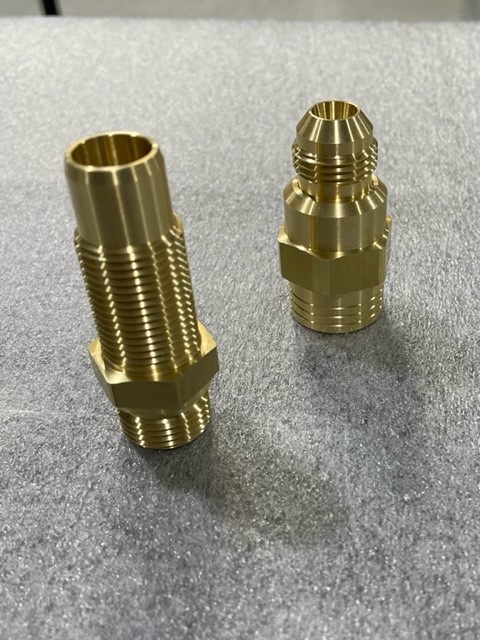
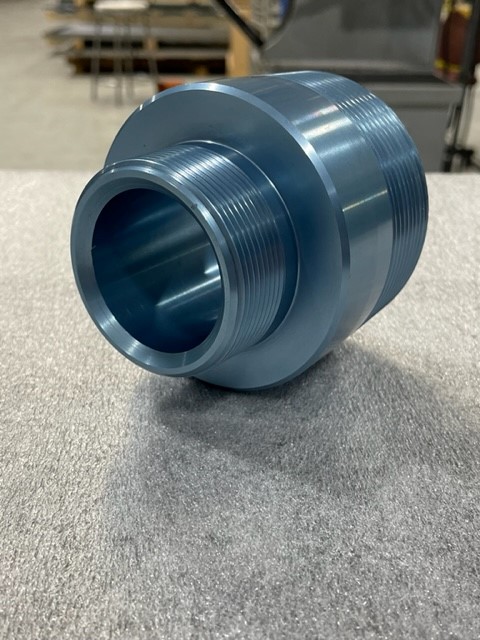
Yes — providing both a 3D CAD model and a 2D drawing is the most effective way to communicate your part requirements. Each document serves a different purpose and the two together eliminate ambiguity. The 3D model conveys geometry, complex contours and spatial relationships in a way that a flat drawing cannot. The 2D drawing is the controlling document: it captures tolerances, surface-finish callouts, material specifications, thread classes, GD&T symbols and inspection requirements. Relying on a model alone can leave a manufacturer guessing about which dimensions are critical and what finish is acceptable. Conversely, a drawing without a model forces the shop to interpret complex geometry from 2D views, which can introduce interpretation errors. When both are provided, the manufacturer can cross-reference them, plan toolpaths accurately and price more confidently. If your design is still in development and a formal drawing is not yet available, a model with a clear notes block is a reasonable starting point, but plan to supply a controlled drawing before production begins.
Most precision manufacturers accept a broad range of CAD formats, though neutral formats are the safest choice when sending files to a new supplier. STEP (.stp or .step) is the most universally supported 3D format and preserves solid geometry reliably across different software platforms. IGES is an older neutral format that remains common. Native files — such as SolidWorks (.sldprt), CATIA, Inventor or Pro/E — can often be opened directly, but compatibility depends on the shop's software version. For 2D drawings, PDF is the standard; DXF or DWG files are typically used for sheet metal flat patterns or laser-cut profiles. If your model was created in a less common platform, exporting to STEP before sending ensures the manufacturer can open it without conversion issues. Parasolid (.x_t) is another widely accepted format for solid models. When in doubt, send STEP for the model and PDF for the drawing — that combination works at virtually every modern CNC shop.
Quantity is one of the most important variables in manufacturing pricing because it directly affects how a shop approaches setup, tooling amortization and process selection. A single prototype may be machined manually in small batches with general-purpose tooling, while a run of several hundred parts might justify dedicated fixtures, custom cutting tools or a more automated workflow — each scenario carries a very different cost structure. Without a quantity, the manufacturer must either make assumptions or ask a clarifying question, both of which slow the quoting process. Including quantity also allows the shop to consider whether secondary operations like anodizing, plating or heat treatment can be batched efficiently. If you are unsure of your exact production volume, providing a range or a prototype quantity alongside an estimated annual usage gives the manufacturer enough context to offer pricing that reflects your likely program trajectory. Quantity breakpoints — for example, pricing at 10, 50 and 250 pieces — can also help you understand how unit cost changes as volume increases.
Have a manufacturing question about your part?
Talk with the Mikron team or send us your drawings for review.
Providing estimated annual usage is highly recommended when you anticipate a part moving from initial order into repeat production. Annual usage figures allow the manufacturer to evaluate whether dedicated tooling, custom fixtures or pre-stocked raw material make economic sense over the life of the program. Shops often price repeat production differently than one-time orders — amortizing setup costs across a higher volume lowers unit pricing and reduces lead time on subsequent releases. If a manufacturer understands that a part will recur, they may also suggest design-for-manufacturing improvements that reduce per-piece cost at scale but would not be worth pursuing for a single run. You do not need a precise forecast — even a range or a statement like "approximately X pieces per year in two or three releases" gives a supplier meaningful context. This kind of visibility helps build a stronger partnership and allows the manufacturer to plan capacity, material procurement and scheduling more effectively. Mikron works with customers across the full arc from prototype to ongoing production programs.
Tolerances have a direct and significant effect on manufacturing cost and lead time. Tighter tolerances generally require slower feeds and speeds, additional inspection steps, more capable equipment and sometimes specialized metrology. A part with a few critical fits held to tight tolerances alongside non-critical geometry held to standard machining tolerances will cost less to manufacture than a part where every dimension carries a precision callout. When preparing an RFQ, distinguish between functional tolerances — dimensions that directly affect assembly, performance or sealing — and reference dimensions where standard machining accuracy is sufficient. Calling out only the tolerances that the application genuinely requires prevents a manufacturer from pricing unnecessarily tight work and allows the shop to allocate inspection resources efficiently. Overly tight tolerances on non-critical features can also increase scrap rates and extend lead times. If you are unsure what tolerance a given feature requires, discussing the functional purpose of that dimension with your manufacturer early in the process can help you arrive at requirements that are both achievable and cost-effective.
Surface-finish requirements belong in every RFQ because they affect both machining strategy and cost. Finish requirements influence cutting tool selection, depth of cut, feed rates and the number of finishing passes a part requires. Beyond machined surface texture, secondary finishes — anodizing, powder coat, paint, plating, passivation, bead blast or brushing — each add process steps, lead time and cost that the manufacturer must account for in pricing. An RFQ that omits finish requirements forces the shop to either quote a default finish that may not meet your needs or ask clarifying questions that delay the quote. On your 2D drawing, call out surface roughness values (Ra or RMS) for critical surfaces and specify any post-machining treatments with applicable specifications or standards. If appearance is important — for example, a visible panel or a customer-facing assembly — describe the cosmetic requirements clearly. If the function of the part drives the finish rather than aesthetics, explain that context so the manufacturer can select the most cost-effective approach that still meets the application.
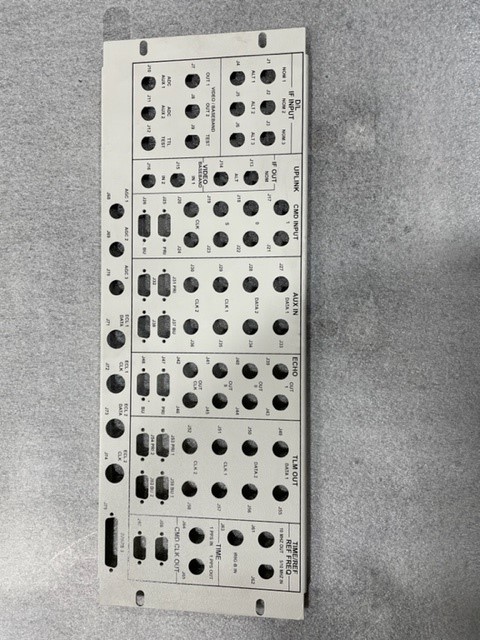
Inspection and documentation requirements can significantly affect the cost and lead time of a manufacturing order, which is why they need to be identified before a quote is generated rather than added after award. A basic order may require only a shop traveler and visual inspection, while a regulated program might call for a full First Article Inspection Report (FAIR), dimensional balloon drawings, material certifications, certificates of conformance, statistical process control data or traceability records. Each of these adds labor and documentation overhead that must be priced in from the start. If inspection requirements are introduced after a quote is accepted, the manufacturer faces either absorbing unexpected cost or renegotiating — neither outcome is ideal. For production runs destined for aerospace, defense, medical or other regulated industries, be explicit about the quality standard the parts must meet. ISO, AS9100, ITAR or customer-specific quality plans each carry different requirements. Aligning on inspection scope upfront allows the manufacturer to build the right process plan and give you a price that reflects the full scope of work.
Even experienced buyers sometimes omit details that create friction in the quoting process. The most frequently missing elements are: a controlled 2D drawing to accompany the 3D model; material specification beyond a generic callout (for example, "aluminum" versus "6061-T6"); tolerance callouts on critical features; surface-finish or coating requirements; delivery date expectations; and inspection or documentation requirements. Quantity is surprisingly often left out, or a quantity is provided without any indication of whether the order is a one-time buy or the first release in a recurring program. Thread specifications — class of fit, depth, hand — are another common gap that can stall a quote. For sheet metal parts, hardware inserts, fastener types or weld requirements may not be captured on the model and need to be explicitly called out. The more complete the information package upfront, the faster a manufacturer can turn around an accurate quote. Reviewing your RFQ against a standard checklist before submitting can eliminate most of these common gaps and reduce back-and-forth.
Have a manufacturing question about your part?
Talk with the Mikron team or send us your drawings for review.
Quote delays most often trace back to incomplete information in the original RFQ. When a manufacturer receives a request without a drawing, without a material callout or without a clear quantity, someone has to stop and ask clarifying questions — and that cycle can add days, especially if the buyer is difficult to reach. Complex parts that require engineering review, unusual materials that need lead-time checks, or tight tolerances that require consultation with the process team all take additional time. On the manufacturer's side, high quote volume, competing priorities or a part that falls outside standard capabilities can also stretch response time. From the buyer's side, the most effective way to speed up a quote is to submit a complete package — model, drawing, material, quantity, delivery expectation and any special requirements — all at once. Designating a single point of contact and responding quickly to clarification requests also keeps the process moving. For time-sensitive needs, calling the shop directly alongside the RFQ submission signals urgency and often accelerates the response.
The most direct path to an accurate quote is a complete, unambiguous information package. Provide a 3D CAD model and a controlled 2D drawing with all critical tolerances, surface finishes and material specifications clearly called out. Specify the quantity — and indicate whether this is a prototype, a one-time production run or the start of a repeat program. Include inspection and documentation requirements upfront. If your part requires secondary operations such as anodizing, plating, heat treatment or assembly, list them explicitly rather than assuming the shop will ask. For complex assemblies, a bill of materials helps the manufacturer understand scope. Being clear about your delivery requirements allows the shop to factor scheduling into the estimate rather than quoting a standard lead time that may not reflect your actual program. If any aspect of the design is still in flux, flag it — a manufacturer who knows a drawing may change can quote accordingly and avoid investing time in toolpath planning for geometry that will be revised. Transparency about your project context consistently produces more accurate quotes.
Price variation between shops quoting the same part is normal and reflects real differences in how each manufacturer would approach the work. Equipment capability plays a large role — a shop with multi-axis machining centers may complete a complex part in fewer setups than a shop relying on older equipment, changing both cost and lead time. Overhead structure, labor rates, geographic location and shop utilization all affect pricing. Fixturing approaches vary: one shop might build a dedicated fixture that increases efficiency at volume while another quotes each piece individually. Material sourcing, scrap rates and the manufacturer's familiarity with your specific material or geometry also contribute. Inspection capabilities matter too — a shop with in-house metrology can often reduce outsourcing costs embedded in a quote. Beyond price, consider whether each quote reflects the same scope: the same material grade, the same tolerance interpretation, the same finish and the same documentation. Apparent price differences sometimes dissolve when you compare quotes line by line. A significantly lower quote deserves scrutiny to ensure nothing critical was omitted rather than assumed.
Price is one variable in a sourcing decision, but purchasing professionals who evaluate only cost often absorb hidden expenses downstream. Lead time reliability is critical — a lower-priced supplier who consistently misses delivery dates creates schedule risk that can far exceed the savings. Quality capability matters: does the shop have the inspection equipment and documented processes to hold your tolerances and meet your quality requirements consistently? Certifications such as ISO 9001:2015 reflect a commitment to quality management systems that reduce defect risk. ITAR registration is essential if your parts contain controlled technical data. Communication responsiveness — how quickly a supplier acknowledges RFQs, returns calls and resolves issues — predicts how the relationship will function under pressure. Scalability is worth considering: can the supplier grow with your program? For high-mix or quick-turn needs, assess the shop's flexibility and its willingness to accommodate engineering changes without disproportionate cost impact. A supplier's track record with similar parts and industries is also meaningful context that unit pricing alone cannot capture.
Vetting a new precision manufacturer before placing an order protects your program from avoidable risk. Start with quality system questions: Are they ISO 9001:2015 certified? Who audits them and how recently? For defense or government programs, confirm ITAR registration. Ask about their equipment — not just machine types but axis count, work envelope range and inspection capabilities such as CMM or optical measurement. Understanding their typical industries and customer base helps you gauge whether they have experience with your tolerances, materials and documentation requirements. Ask how they handle engineering changes mid-program and what their process is for reporting nonconformances. Discuss lead times honestly, including how they manage capacity during busy periods and whether they subcontract any operations. Ask for references from customers with similar part complexity. Find out who your point of contact will be for day-to-day communication. Finally, ask how they approach first articles and whether they can support you as you scale from prototype into production. A supplier who answers these questions directly and confidently is demonstrating the kind of transparency that makes for a reliable manufacturing partner. Mikron welcomes these conversations — contact us to discuss your specific program requirements.
Related Guides
5 min read
The Engineer's Guide to Preparing a Manufacturing RFQ
A complete walkthrough of every document, specification, and detail a contract manufacturer needs to quote your part accurately — and how to avoid the delays that come from incomplete packages.
6 min read
How to Select a Precision Manufacturing Partner
Choosing the right contract manufacturer is a strategic decision with long-term consequences. This guide provides a practical framework for evaluating, qualifying, and selecting a precision manufacturing partner.
Ready to Discuss Your Project?
Mikron's team is available to review your drawings and answer questions specific to your part.