
Knowledge Center
Materials
Aluminum alloys, stainless steel, brass, plastics — how material choice affects machinability, cost, and performance.
CNC machining is compatible with an exceptionally broad range of engineering materials, which is one reason it remains the default process for precision components across so many industries. Metals — aluminum alloys, stainless steels, carbon steels, brass, copper, titanium, and high-temperature alloys like Inconel — are all routinely machined. Engineering plastics including Delrin (acetal), UHMW polyethylene, PEEK, nylon, polycarbonate, and PTFE can also be machined to tight tolerances when fixturing and cutting parameters account for their thermal and mechanical properties.
The practical limits are machinability and rigidity: a material needs to hold its shape under cutting forces and not gum up or melt against the tool. Most structural engineering materials satisfy those conditions. Exotic alloys and composites are machinable but require specialized tooling and process knowledge. For any program, material selection should happen in parallel with design — the choice of alloy or grade influences tolerances achievable, surface finish, finish coating compatibility, and ultimately cost. Contacting a machine shop early with both the functional requirements and the candidate material allows them to flag any machinability concerns before design is locked.

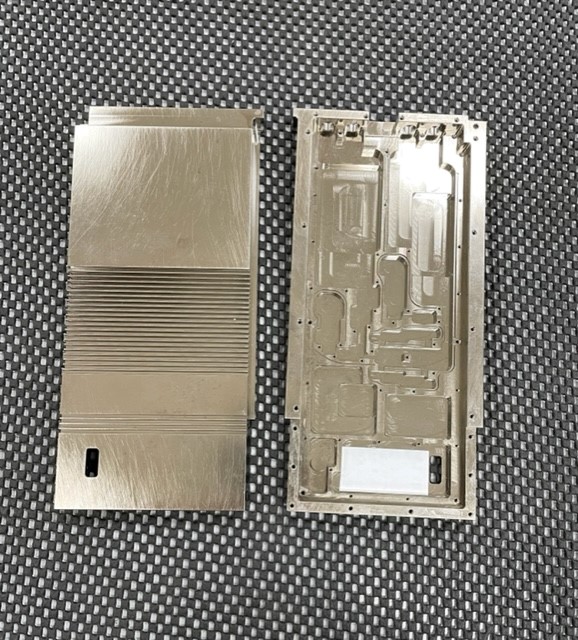
Aluminum is the most commonly machined metal for good reason. It cuts quickly — aluminum alloys machine several times faster than steel — which directly reduces cycle time and cost. It produces clean chips that evacuate well, puts modest demands on tooling, and accepts the tight tolerances and fine surface finishes that precision applications require. The strength-to-weight ratio is excellent, making it the default choice for aerospace structures, electronic enclosures, heat sinks, and any application where mass matters.
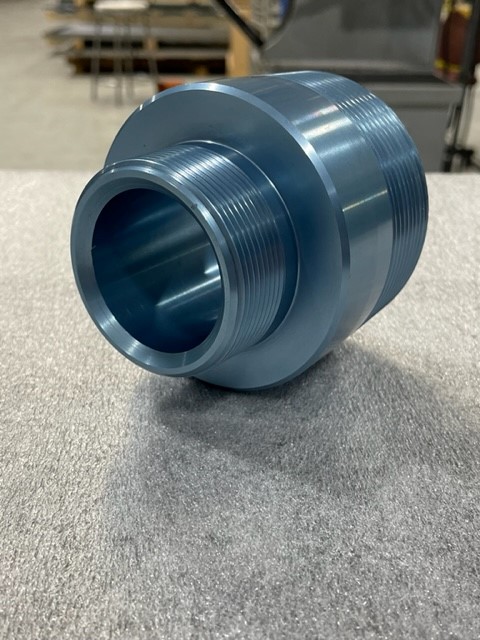
Aluminum also responds well to finishing processes. Anodizing produces a hard, corrosion-resistant oxide layer that can be dyed and sealed; it's integral to the metal rather than a coating that can chip or peel. Alodine (chromate conversion coating) provides corrosion protection with minimal dimensional impact, important for tight-fitting parts. Paint adhesion is reliable with proper surface prep. For purchasing professionals, aluminum's combination of machinability, material cost, and finish versatility typically delivers the best overall value for non-ferrous structural components. Where higher strength, wear resistance, or elevated-temperature performance is required, a steel or titanium alloy may be warranted — but aluminum is the right starting point for most designs.

Aluminum alloys are grouped by their primary alloying elements, and the series number signals general characteristics. The 6000 series — 6061 and 6063 being the most familiar — balances good strength, excellent corrosion resistance, and very good machinability. 6061-T6 is the workhorse of machined aluminum parts: widely available, well understood, and appropriate for structural components, brackets, and housings in most industries.
The 7000 series, typified by 7075, offers significantly higher strength — comparable to mild steel in some tempers — at the cost of somewhat reduced corrosion resistance and slightly more demanding machining. It's common in aerospace and high-performance structural applications where strength-to-weight is paramount. The 2000 series (2024 being typical) also achieves high strength and is used in aerospace, but is less corrosion-resistant and requires careful anodizing or cladding for environmental protection. For general industrial and electronic applications, 6061-T6 is the sensible default. If your application involves high stress, fatigue loading, or weight-critical structures, a 7000-series alloy may be worth specifying — and worth a conversation with your machine shop and structural engineer to confirm the right temper and any finish requirements.
Stainless steel earns its place when corrosion resistance, strength at elevated temperatures, or food/medical-grade cleanliness requirements make aluminum or carbon steel inadequate. Grade 303 is the most machinable stainless — sulfur additions improve chip breaking — and it's appropriate for fittings, shafts, and fasteners where moderate corrosion resistance suffices. Grade 316 adds molybdenum for significantly better resistance to chlorides and aggressive chemicals, making it the standard for marine, chemical processing, and medical applications. 17-4 PH offers high strength through precipitation hardening and is common in aerospace and defense components.
The trade-off is cost and cycle time. Stainless machines slower than aluminum, wears tooling faster, and work-hardens if feeds and speeds aren't managed carefully — all of which increase machining cost relative to equivalent aluminum parts. It's also heavier. When evaluating stainless, confirm that the corrosion, temperature, or regulatory driver genuinely requires it rather than defaulting to it for perceived quality. For parts that need corrosion resistance but not stainless-grade performance, a well-anodized 6061 or a zinc-plated steel may deliver adequate performance at lower cost. Mikron can help evaluate material options relative to your application if you share the operating environment and functional requirements.
Stainless steel presents a more demanding machining environment than aluminum on nearly every dimension. Cutting speeds are significantly lower — typically five to ten times slower than aluminum — because stainless generates more heat at the tool-workpiece interface and is far less forgiving of heat buildup. That heat accelerates tool wear and, if managed poorly, can harden the surface layer through work-hardening, making subsequent passes even more difficult.
Chip control is another challenge. Stainless steels tend to produce long, stringy chips that resist breaking and can wrap around tooling or re-cut the finished surface. Rigid setups, sharp tooling with appropriate coatings (TiAlN is common for stainless), high-pressure coolant delivery, and conservative chip loads are all standard practice. The net effect is longer cycle times, higher tooling consumption, and more careful process management — all of which are reflected in machining cost. For engineers designing components, it's worth confirming that every feature tight-tolerance or requiring fine surface finish genuinely needs stainless. Selective specification of stainless only where corrosion or strength demands it, and aluminum or carbon steel elsewhere in the assembly, can substantially reduce total part cost without compromising system performance.
Have a manufacturing question about your part?
Talk with the Mikron team or send us your drawings for review.
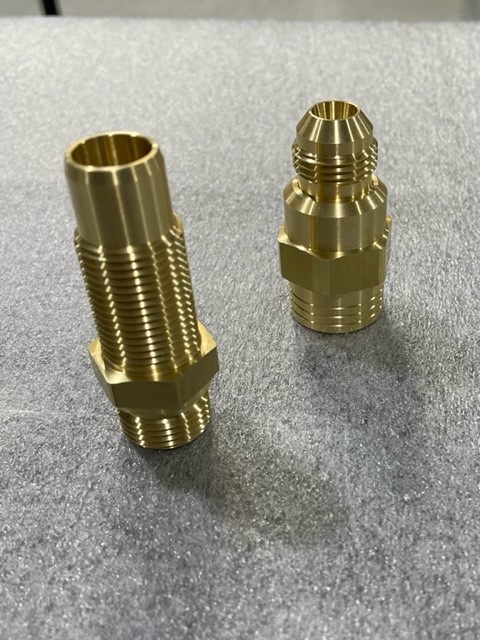
Brass is one of the most machinable metals available — in many respects, easier to cut than aluminum. Free-machining brass alloys (C360 being the most common) contain lead additions that promote chip breaking, resulting in clean, short chips, excellent surface finish, and long tool life. Cutting speeds can be high, which keeps cycle times low and cost competitive even for intricate turned parts.
This machinability makes brass the traditional choice for precision turned components: fittings, valve bodies, threaded inserts, electrical connectors, and instrumentation parts where the combination of dimensional accuracy, smooth finish, and moderate corrosion resistance is valued. Brass also plates and finishes exceptionally well — nickel, chrome, and tin plating all adhere reliably. The primary limitations are weight (brass is denser than aluminum or many steels by volume) and cost, as copper-based alloys carry a commodity price premium that fluctuates with copper markets. For low-to-mid volume precision fittings and turned components, brass remains a strong material choice. Mikron machines brass regularly for customers requiring precision fluid and electrical components.
Several properties converge to make brass particularly well-suited for precision fittings and small turned components. Its machinability means threads, bores, and external profiles can be held to tight tolerances with excellent surface finish in a single turning operation. The material is naturally resistant to galling — the tendency for mating metal surfaces to seize under pressure — which matters for threaded fittings assembled repeatedly in the field. Brass also offers inherent corrosion resistance in many environments, adequate for water, air, and many chemical systems without additional coating.
Electrically, brass is a reliable conductor, making it standard for connector pins, terminal blocks, and RF fittings where both mechanical precision and electrical continuity are required. Its slightly warm color also makes it visually identifiable in assembly — a practical benefit in complex fluid or electrical systems. For buyers, brass fittings are a well-established category with broad supplier familiarity, which can support competitive quoting and reliable sourcing. When evaluating brass for your application, confirm compatibility with the specific fluid or environment — certain aggressive chemicals, high-ammonia environments, or dezincification-prone conditions may require a different alloy or a protective coating. A knowledgeable machine shop and a materials reference can help clarify those boundaries early.
Engineering plastics are routinely CNC machined, and for many applications they outperform metals on weight, electrical isolation, chemical resistance, or acoustic properties — all without sacrificing the dimensional precision CNC delivers. Common machinable plastics include Delrin (acetal/POM), UHMW polyethylene, nylon (PA6, PA66), PEEK, polycarbonate, PTFE (Teflon), and HDPE. Each has a distinct property profile; PEEK, for instance, offers exceptional strength and chemical resistance at elevated temperatures but is considerably more expensive than Delrin or nylon.
Machining plastics requires adjusted process parameters compared to metals. Many plastics have low thermal conductivity — heat doesn't dissipate quickly — so aggressive cutting speeds can cause localized melting or distortion. Sharp tooling and appropriate chip evacuation are essential. Some materials, particularly PTFE, are soft enough to deform under clamp pressure, requiring careful fixturing. Residual stress in extruded or molded stock can cause parts to move dimensionally after roughing, so stress-relief annealing or careful machining sequences may be needed for precision parts. Sharing your dimensional requirements and operating environment with your machine shop at the outset allows them to recommend the right grade and plan a process that delivers stable, accurate parts.
Material choice influences cost through at least three separate channels: raw material price, machinability (which drives cycle time and tooling consumption), and finish process compatibility. Raw material cost varies enormously — commodity aluminum might cost a few dollars per pound, while aerospace-grade titanium or PEEK can cost hundreds. For small, precise parts, the material cost per piece may be modest in absolute terms but significant as a fraction of total part cost.
Machinability has a larger effect on cost than many engineers realize. A material that machines at half the speed requires twice the cycle time for equivalent material removal — and slower feeds often mean more tool wear as well. This difference compounds on complex parts with significant stock removal. On the finish side, some materials require specific or expensive processes: certain stainless grades need passivation, titanium may require specialized handling to prevent contamination, and some plastics cannot tolerate the chemicals in standard cleaning or coating processes. For cost-sensitive programs, it's worth presenting material options to your machine shop during design rather than after: they can often quantify the cycle-time difference between two candidate alloys and help you weigh that against the material cost and performance trade-off. The most expensive material is not always the most expensive part.
Even a well-designed part with a clear drawing can stall in production if the specified material isn't available in the required form factor. Raw material for machining typically needs to be purchased in standard stock sizes — bar, plate, sheet, or tube — in the correct alloy, temper, and dimensions to minimize waste and setup complexity. Commodity alloys like 6061-T6 aluminum bar or 303 stainless rod are held in distributor inventory and usually ship within a day or two. Specialty alloys, unusual tempers, or large cross-sections may have distributor lead times measured in weeks, and some materials require mill orders with lead times of months.
Supply chain conditions affect availability variably; what ships next-day in stable conditions may have extended lead times during periods of high industrial demand or material shortages. For programs with hard delivery commitments, it's worth confirming material availability at the quoting stage rather than assuming standard alloys are always on the shelf. Designing to common stock sizes — choosing a plate thickness or bar diameter that matches standard distributor offerings — also eliminates the lead time and cost of special-order material. Shops with established distributor relationships and the ability to consolidate material purchases across customers can often navigate availability constraints more effectively than buyers sourcing material independently.
Ready to Discuss Your Project?
Mikron's team is available to review your drawings and answer questions specific to your part.