
CNC Turning for Custom Rotational Parts
Mikron Manufacturing provides CNC turning within its machining services in Colorado Springs. Turning is used to make features around a rotating workpiece. A useful inquiry identifies the part’s shape, material, functional dimensions, and acceptance requirements instead of assuming that every round component has the same manufacturing needs.
This page concentrates on the buyer’s handoff for turned parts. The broader CNC capability page covers milling and turning together; here the focus is on communicating diameters, mating relationships, drawing revisions, and requirements for the finished component. Mikron’s portfolio includes turned fittings, providing existing examples to review without treating an example as a specification for a new job.
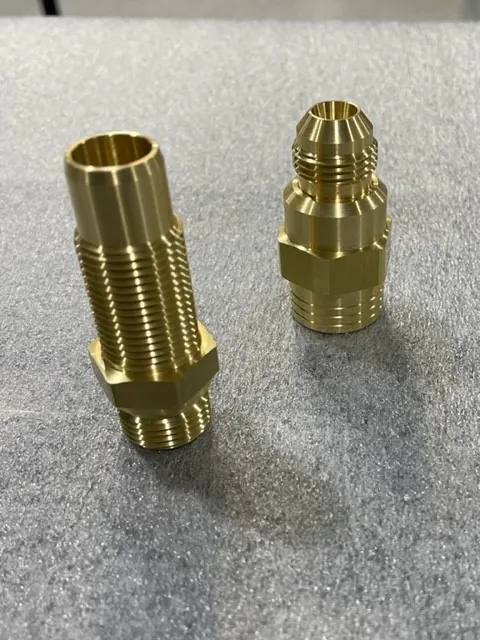
For buyers of fittings and other turned components
A turned-part inquiry can come from a design engineer, a purchasing team, or a manufacturer replacing an existing component. Mikron serves Front Range manufacturers and customers nationwide. Whether the part belongs in an electronics product, industrial equipment, or another supported industry, explain its role and the surfaces that matter to fit or function. Do not assume a portfolio photograph establishes the dimensions or material of your component.
Describe the complete rotational geometry
Send the current drawing and model when available. Identify the features that determine how the part locates or connects with another component. For a drawing that includes threads, internal features, shoulders, or other requirements, make the specification explicit. A photograph can explain context, but it should not replace a defined part drawing for a manufacturing quotation.
Where a part includes features beyond its turned shape, include those details in the same package. The existing CNC capability covers both milling and turning, so a combined part should be reviewed as a complete component. Ask about the appropriate process rather than presenting an assumed sequence as a requirement unless that sequence is itself part of the design specification.
Separate material and finish requirements
Mikron’s machining information lists steel, stainless steel, aluminum, brass, and plastics. Specify the grade required by your drawing. The site’s brass fitting and anodized turned fitting examples illustrate different finished components, not a promise that any material or coating is appropriate for every turned design. Describe the actual requirements of your application.
If a finish is required, include it with the initial inquiry. Identify functional surfaces or dimensions that need attention after finishing, and provide any relevant drawing notes. Mikron describes finishing coordination elsewhere on the site; ask how the required work and documentation should be included in the quotation rather than assuming all finishing is done inside the facility.
Prepare a reviewable turning request
State the quantity needed now, any prototype stage, and the drawing revision. STEP, IGES, DXF, DWG, and PDF are accepted drawing formats on the site. Use matching part numbers across the files and your inquiry. If you provide an older part for reference, distinguish it clearly from the current design and list the changes that require review.
Include inspection expectations and ask whether a first-article review is appropriate before a larger run. Define the records your organization needs and who will review an initial part. These details support a more useful discussion than an inquiry that lists only a material and an approximate shape. Use the quote form for files and the contact page for questions about preparing them.
Frequently Asked Questions
Does Mikron offer turning separately from milling?
The site explicitly lists CNC turning as part of Mikron’s machining capabilities. This page explains turning-specific quotation information. The complete drawing should still be reviewed when a component combines turned and milled features, rather than treating those requirements as unrelated parts.
Can the work portfolio define my part specification?
No. Existing turned fittings are useful examples of work, but their photographs do not establish a new part’s material, dimensions, finish, or acceptance criteria. Supply a drawing and explain the intended application. Any specification for your component needs to be agreed for that job.
What should I say about mating components?
Identify the relationship that matters: where the component locates, what it connects to, and which features control that relationship. Include the relevant drawing requirements. Do not replace a specified fit with an informal description such as “very tight” or assume the manufacturer can infer your acceptance criteria.
How should I describe a prototype and a later run?
Give the prototype quantity separately from the possible production quantity. Explain what will be reviewed before release and how a drawing revision will be approved. Mikron describes prototype and production machining, but this page does not promise an order size, production rate, or delivery date.
Where is Mikron and how do I begin?
Mikron is at 4385 Northpark Drive, Colorado Springs, CO 80907. Start with Request a Quote and include the current part files, material, quantity, finish, and inspection requirements. Contact Mikron if you need to clarify what information belongs in the package before submitting it.